If you are building a branded desk mat or mouse pad product line, the right OEM/ODM factory should do more than print a logo. You need a supplier that can help you define the product, select suitable materials, review artwork, produce a physical sample, control batch quality, prepare branded packaging, and coordinate the handoff to your nominated forwarder or Amazon FBA workflow.
This guide explains how to evaluate a custom desk mat and mouse pad manufacturer from the first product brief to bulk shipment. It is written for B2B buyers—not retail shoppers—including global brands, cross-border Amazon sellers, esports peripheral brands, corporate gift companies, distributors, and original-design businesses.
Important: Product availability, MOQ, lead time, certifications, test reports, packaging scope, shipping terms, and tolerances depend on the product, order, destination market, and confirmed specification. The final commercial terms are governed by the quotation and Pro Forma Invoice.
OEM or ODM: Which Development Route Fits Your Project?
The first decision is whether you already have a complete product specification or need the factory to help develop one.
| Route | What you provide | What the factory does | Best fit |
|---|---|---|---|
| OEM (Original Equipment Manufacturing) | A completed design and specification, including artwork, materials, size, thickness, edge finish, and packaging requirements | Produces the item to the approved specification and applies your brand identity | Brands and sellers with an established product design that need reliable batch production |
| ODM (Original Design Manufacturing) | Product ideas, target positioning, performance goals, and preferred use case | Helps with material selection, structure, appearance, colour direction, sampling, and specification development | New brands and teams that want a differentiated product but do not yet have a complete product plan |
OEM and ODM can also be combined. For example, you may provide your artwork and brand identity while asking the factory to recommend a surface, base thickness, edge treatment, or packaging format. Confirm the exact development scope before sampling.
Choose OEM When Your Product Specification Is Complete
OEM is suitable when you already know the product’s dimensions, materials, printing method, thickness, edge finish, packaging, and target quantity. The factory’s role is to produce consistently against the approved specification.
Choose ODM When You Need Product Development Support
ODM is suitable when you have a market concept but need help translating it into a manufacturable product. The development conversation may cover surface and base combinations, thickness, special shapes, edge treatments, colour schemes, packaging, and sample iterations.
For confidential ODM projects, discuss a non-disclosure agreement (NDA), ownership of development files, and permitted use of project information before sending sensitive artwork or specifications.
Who Uses Custom Desk Mat and Mouse Pad OEM/ODM Services?
A B2B factory can support different product goals, but each buyer should start with a clear use case:
- Cross-border brands and Amazon sellers: private-label products, controlled batches, FBA-ready preparation, and repeat orders.
- Esports peripheral brands: speed, control, Cordura® or Poron®-based premium products, edge quality, print accuracy, and performance consistency.
- Corporate brands and gift companies: logo printing, uniform specifications, coordinated colours, and compliant bulk delivery.
- Distributors and overseas wholesalers: standardised white-label products, private-label options, and repeatable supply.
- Design studios and original-design brands: small trial orders, multiple artworks, special shapes, and protection of original designs.
The product, material, packaging, and inspection plan should reflect the target customer—not simply the lowest unit price.
What Products and Materials Can You Specify?
A well-prepared product brief identifies the product family first and the performance goal second. iDeskMat’s current product positioning covers custom desk mats, gaming mouse pads, corporate gift mats, and related soft-pad products.
For the current product range, see iDeskMat’s custom desk mat and mouse pad products. You can also review the factory overview and production capabilities.
Select the Surface for the Intended Experience
| Surface option | Typical characteristics | Suitable applications | Key qualification to confirm |
|---|---|---|---|
| Standard Polyester woven cloth | Balanced glide and control; suitable for full-colour heat-sublimation transfer | Office, promotional, general gaming, and mainstream product lines | Final hand feel, print result, and available construction |
| Speed-type tight-weave fabric | Smoother surface and lower glide resistance | Speed-oriented gaming products and large mouse movements | Performance target and sample approval |
| Control-type jacquard coarse weave | More surface resistance and stable stopping feel | FPS and control-oriented gaming products | Target glide/control balance and wear effect on mouse feet |
| Cordura® fabric | Abrasion-resistant, textured nylon surface with water-repellent potential depending on construction | Premium esports and high-durability product lines | Exact fabric grade, authorised material use, texture, and print appearance |
| PU synthetic leather | Smooth, business-oriented appearance; easy to wipe and clean | Office, corporate gifts, and minimalist desk mats | Printing method, surface durability, and suitability for the intended use |
Cordura® is a registered brand name. Use the mark only when the specified material is genuinely authorised and available for the project. Otherwise, describe the material accurately by its generic construction or supplier-confirmed specification.
Select the Base for Stability and Cushioning
- Natural rubber: the factory’s main base option for many cloth-surface desk mats and mouse pads; it offers grip, flexibility, and a balanced cost/performance profile. Confirm odour, storage, temperature, and dimensional requirements for the specific order.
- Poron® or other specified polyurethane foam: a premium cushioning option that can provide a softer feel and reduced impact noise. Confirm the exact material grade, availability, compression behaviour, and cutting feasibility for large sizes.
Material performance is application-dependent. A sample should be used to confirm the actual glide, texture, flatness, print appearance, edge feel, and base grip before mass production.
Define Size and Thickness Together
The larger and thinner a desk mat is, the more carefully flatness, rolling, packaging, and storage need to be evaluated. iDeskMat’s current supplied range includes standard sizes and custom dimensions, subject to cutting equipment, fabric width, construction, and project feasibility.
The company-provided planning range is approximately 100–1,200 mm in width and 100–2,400 mm in length. Widths above 1,200 mm and extra-long formats require a production feasibility review before quotation.
For natural rubber bases, the supplied planning range is 2 mm, 3 mm, 4 mm, and 5 mm, subject to the selected construction:
- 2 mm: thinner profile and easier flat lay for some large desk mats.
- 3 mm: a balanced option for office and gaming use.
- 4–5 mm: more cushioning and a softer, quieter feel for selected premium products.
These are project-planning guidelines, not a universal promise for every material or size. Confirm the final specification on the quotation and approved sample.
How Should You Evaluate a Custom Desk Mat Manufacturer?
Before comparing unit prices, evaluate the supplier’s ability to control the complete product process.
Check Product and Process Capability
Ask whether the factory can support the specific combination you need:
- Surface and base material
- Size, thickness, and shape
- Printing method and colour requirements
- Edge stitching, heat-sealed edge, or other finish
- Logo, label, and packaging format
- Number of designs and SKUs
- Sample and repeat-order process
A supplier may offer a material in general but not the exact material-size-edge combination required for your product. Confirm the complete bill of materials, not only the product name.
Review Artwork and Printing Support
For most fabric desk mats and mouse pads, the factory identifies heat-sublimation transfer as its main printing method. It can support full-colour images, gradients, and complex designs, but sublimation has important limitations:
- It does not print opaque white ink. White areas generally show the original fabric colour.
- Neon and extremely bright colours may not reproduce exactly.
- Pantone references help communicate a target but do not guarantee a 100% match.
- Dark fabric changes the appearance of light artwork.
A physical pre-production sample is the safest way to approve real colour, texture, and hand feel.
Other methods such as screen printing, direct-to-fabric digital printing, or UV printing may be assessed for suitable products. They are not interchangeable: the method depends on the surface, design complexity, quantity, durability target, and required colour result.
Confirm the Artwork File Requirements
For a production-ready artwork package, the current company guidance recommends:
- AI, EPS, or editable vector PDF where possible
- PSD, TIFF/TIF, or JPG/PNG-24 for suitable raster artwork
- At least 300 DPI for raster artwork
- CMYK colour mode for production artwork
- 2–5 mm bleed on all sides where the design reaches the cut edge
- Text converted to outlines/paths to avoid missing fonts
- A consistent file name such as
PO1234-900x400-V02.pdf
The factory should review the artwork against the confirmed size, safe area, bleed, edge treatment, and printing method. Do not approve mass production from a digital mock-up alone.
What Should You Include in a Quote Request?
A complete brief reduces clarification rounds and makes supplier quotations more comparable.
| Requirement | Information to provide | Why it matters |
|---|---|---|
| Product | Desk mat, gaming mouse pad, gift mat, or special shape | Determines the relevant construction and process |
| Size and thickness | Finished dimensions, tolerance target, and thickness | Affects material use, cutting, packing, and freight |
| Surface and base | Woven cloth, speed fabric, Cordura®, PU, natural rubber, Poron®, or another approved option | Determines feel, durability, print method, and cost |
| Artwork | File, artwork version, print area, colour target, and edge bleed | Prevents production ambiguity and rework |
| Edge | Straight cut, stitched edge, binding colour, or special finish | Affects appearance, durability, and lead time |
| Quantity | Total quantity, SKU count, and quantity per design | Determines MOQ, setup, production planning, and packing |
| Packaging | OPP bag, retail box, private-label pack, labels, inserts, or FBA prep | Affects materials, labour, carton plan, and cost |
| Destination | Country, port, nominated forwarder, or FBA shipment plan | Determines handoff, documentation, and shipping quotation |
| Timing | Sample target and bulk delivery target | Allows realistic production scheduling |
Use the iDeskMat FAQ to review common questions before sending your brief, then send an inquiry with the complete specification.
How Does the Custom OEM/ODM Process Work?
A controlled development process normally follows these stages:
1. Submit the Product Brief
Provide the product type, target application, size, thickness, surface, base, artwork, quantity, packaging, destination, and timing.
2. Confirm Feasibility and the Quotation
The factory reviews materials, equipment, dimensions, artwork, packaging, and delivery requirements. The quotation should state the product specification, quantity, unit price, sampling charges, packaging, shipping scope, payment terms, and validity period.
3. Review Artwork and Materials
Confirm the production file, colour expectations, material sample, thickness, edge construction, and tolerance. Resolve all changes before sampling.
4. Approve the Physical Sample
iDeskMat supports both existing-stock samples and customer-specific samples. Existing samples may be used to review materials and construction. A custom sample can be made from the buyer’s artwork, size, thickness, material, and edge requirements. Sample fees and freight are payable according to the quotation.
Current planning guidance indicates approximately 1–3 working days to arrange available stock samples, 3–7 working days for standard custom samples, and 7–12 working days for complex samples such as Cordura®, Poron®, stitched edges, special shapes, multiple revisions, or special printing.These timelines begin after the required payment and complete production-ready artwork are received and remain subject to project confirmation.
5. Confirm the Final Production Specification
The approved sample, artwork version, bill of materials, packaging, inspection standard, tolerances, quantity, and delivery terms should be recorded in the purchase documents.
6. Start Bulk Production After All Approvals
The production clock should begin only after the deposit, final artwork, and complete process confirmation are received.
Planning lead‑time:
‑ Standard orders: 15‑25 working days
‑ Complex orders: 15‑35 working days
Lead‑time excludes international transit. Cordura®, Poron®, special shapes, special packaging, FBA preparation, and multi‑SKU orders may require additional planning.
7. Inspect, Pack, and Handoff for Shipment
The factory completes the agreed inspection and packaging process, then hands the goods to the buyer’s nominated forwarder or follows the confirmed shipping arrangement.
How Do MOQ, Quality, and Lead Time Affect the Decision?
Confirm MOQ by Product and Design
The standard planning MOQ supplied for this draft is 100 pieces, with special requirements subject to negotiation. MOQ can vary with the product, material, dimensions, artwork, number of designs, packaging, and setup requirements. Multi-design orders may also require a separate quantity per design.
Treat the MOQ in the quotation as the controlling figure for the specific project. Do not assume that a MOQ for one standard cloth mouse pad applies to a Cordura®, Poron®, special-shape, or complex-packaging order.
Agree on Quality Criteria Before Production
The company states that its quality process follows four stages:
- IQC: Incoming raw‑material component inspection
- IPQC: In‑line patrol inspection during mass production
- FQC: Finished‑goods batch inspection
- OQC: Final outgoing check before goods leave factor
The supplied inspection reference is AQL 2.5 for mass production. The applicable inspection plan, sample size, tolerance, and acceptance criteria should be recorded in the Pro Forma Invoice or an approved quality agreement.
| Acceptable Normal Manufacturing Tolerance | Reference Value |
|---|---|
| Dimension tolerance | ±1‑2 mm |
| Thickness tolerance | ±0.2‑0.3 mm |
| Colour deviation between sample & bulk | 5‑8 % due to fabric batch & sublimation temperature |
| Rubber odour | Fades within days after unpacking |
Items above are not manufacturing defects.
Non‑acceptable major defects eligible for claim:
‑ Fabric tearing, fraying or broken stitching
‑ Severe printing smudge, missing graphic or mis‑alignment
‑ Substrate cracking, fabric‑base delamination
‑ Wrong dimension, wrong thickness or wrong edge finishing versus approved pre‑production sample.
Agree on the Defect and Claim Procedure
The company’s supplied policy distinguishes manufacturing defects from transit damage, buyer-approved sample variation, incorrect buyer artwork, improper use, and storage issues. The current supplied claim window is 15 working days after receipt, supported by clear photo or video evidence. Remedies for confirmed manufacturing defects may include replacement production or partial compensation; bulk customised orders are not automatically eligible for a full refund.
These terms are policy information, not a substitute for the final Pro Forma Invoice. Buyers should confirm the claim window, evidence requirements, remedy, and risk-transfer point in writing before placing an order.
What Packaging and FBA Preparation Can Be Requested?
Packaging should be defined at the quotation stage because it affects material cost, labour, carton dimensions, labelling, and shipment planning.
| Packaging level | Possible scope | Best fit |
|---|---|---|
| Basic export packaging | Individual OPP bag, export carton, buyer marks, PO number, quantity, and gross/net weight information | Wholesale and freight-forwarder handoff |
| Private-label packaging | Frosted drawstring bag, colour/white/kraft box, logo, UPC or brand stickers, warning labels, inserts, hangtags, and bundled sets | Retail brands and branded product lines |
| FBA-ready preparation | Individual bagging and suffocation warning where required, FNSKU and carton labels, carton planning, removal of unrelated labels, and SKU-based packing | Amazon sellers using a confirmed FBA shipment plan |
iDeskMat describes its FBA service as factory-side preparation for goods that are ready to be sent to Amazon warehouses. The exact label, carton, bagging, shipment-plan, and country requirements must be supplied by the buyer and verified against the current Amazon requirements for the relevant marketplace.
For branded artwork, labels, packaging, and original designs, the buyer should confirm that it owns or is authorised to use the content. iDeskMat states that an NDA can be discussed for confidential ODM projects and that exclusive custom designs will not be resold to other customers without written permission. Put any confidentiality, ownership, and permitted-use terms in a signed agreement.
How Should You Plan Shipping and Trade Terms?
The current supplied operating model is that the factory hands the goods to the buyer’s nominated forwarder, while freight, insurance, destination customs clearance, and duties are allocated according to the agreed trade term.
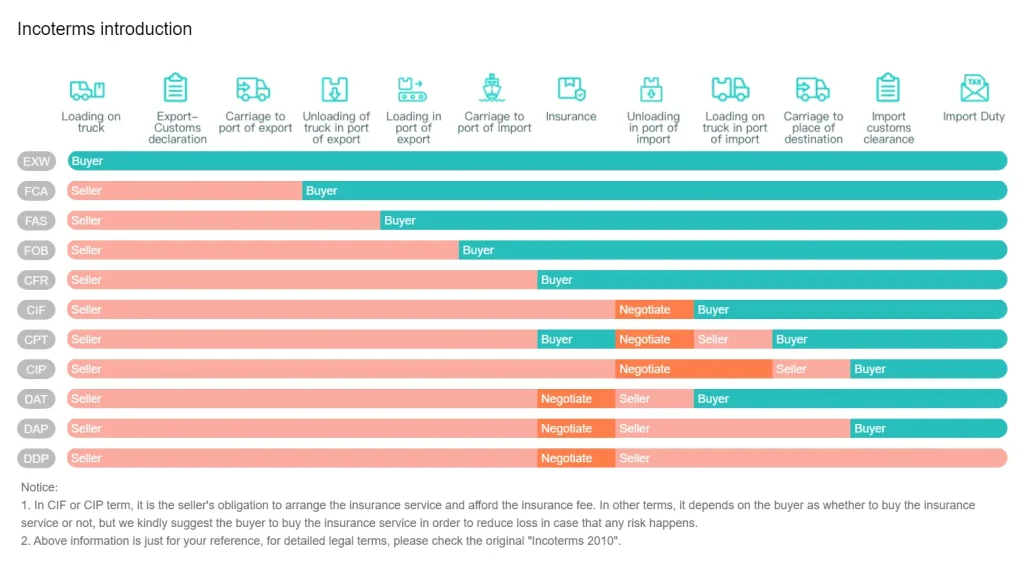
Note: DDP service requires pre‑assessment by country and is not available for every destination.
Incoterms® rules allocate specific responsibilities and costs, but the named place and contract wording still matter. Refer to the International Chamber of Commerce Incoterms® 2020 rules and obtain transaction-specific advice where needed.
The supplied planning transit‑time estimates (excluding customs clearance, carrier schedules, peak seasons):
‑ Ocean freight to EU / US ports: 25‑40 days
‑ Air freight: 7‑15 working days
‑ International express: 3‑7 working days
These are estimates only and should be quoted for the specific origin, destination, shipment size, and service.
Which Compliance and Testing Documents Should You Request?
Compliance is product- and market-specific. Ask the supplier to identify the exact document, product scope, test method, issuing body, date, and applicable destination market.
The company states that it can provide or support documentation related to RoHS, REACH, CE, ISO quality systems, batch inspection, and customised third-party testing, subject to the product and project. This wording is deliberately qualified: do not describe every product as automatically certified or every document as a market-entry approval.
For EU or other regulated markets, the importer or brand owner remains responsible for confirming the legal requirements applicable to the final product and intended use. Request current test reports and declarations for the actual material and product configuration.
What Common Purchasing Mistakes Should You Avoid?
1.Expecting Opaque White from Sublimation
Sublimation does not generate white ink. White areas normally show the base fabric. Adjust the artwork or select a different printing surface and method if opaque white is essential.
2.Approving Only a Digital Mock-Up
A mock-up cannot confirm the real fabric texture, colour, edge feel, flatness, or rubber grip. Approve a physical pre-production sample before bulk production.
3.Choosing an Ultra-Large Thin Mat Without a Flatness Review
Large formats and thin constructions may require a specific material and thickness recommendation to reduce curling or flatness issues. Ask the factory to review the finished dimension and packing method together.
4.Planning a Tight Launch Around Premium Materials
Cordura®, Poron®, special edge work, special shapes, and complex packaging can require extra material preparation and production time. Confirm the schedule before committing to a launch date.
5.Leaving FBA Requirements Until the End
Missing warnings, labels, carton limits, or SKU instructions can cause rework or receiving problems. Send the confirmed FBA shipment requirements with the quotation request.
6.Mixing Designs Without Confirming Per-Design MOQ
A mixed-design order may still have a minimum quantity or setup requirement for each design. Confirm the quantity, artwork count, and possible setup charges in writing.
7.Treating Normal Manufacturing Variation as a Defect
Colour, dimension, thickness, rubber odour, and edge appearance can have defined tolerances. Agree on the inspection standard and acceptable variation before production.
8.Sending Artwork Without Confirming Ownership
Use only artwork you own or are authorised to reproduce. For confidential ODM projects, discuss an NDA and record ownership and permitted use in writing.
Why Consider Xiamen iDeskMat Technology Co., Ltd.?
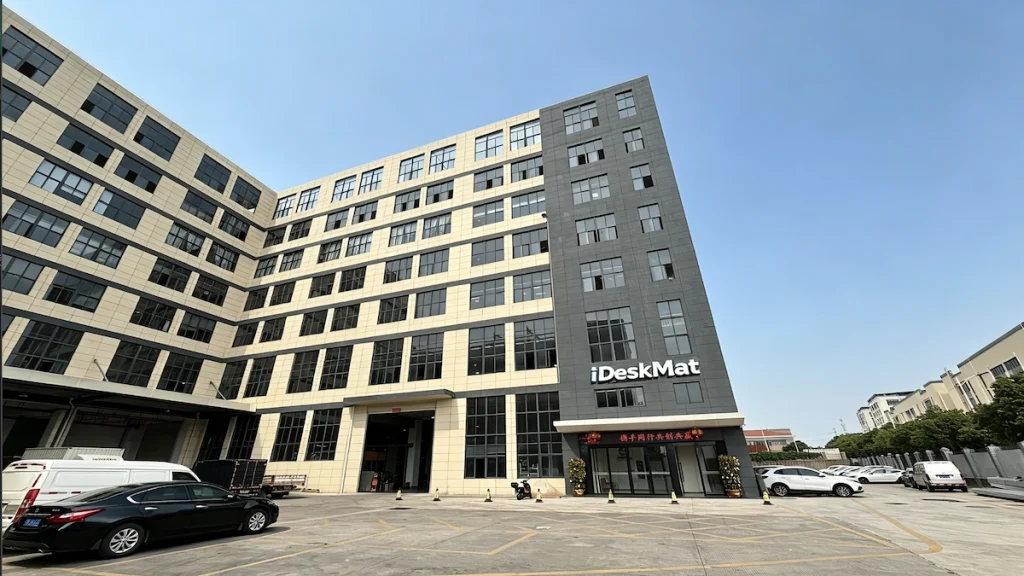
Xiamen iDeskMat Technology Co., Ltd. positions itself as a source manufacturer focused on B2B custom desk mats, mouse pads, and related soft-pad products rather than retail sales. Its stated service scope covers material selection, design sampling, bulk manufacturing, quality control, private-label packaging, and factory-side FBA preparation.
The current company profile supplied for this guide describes a facility of approximately 2,700 m², a team of 30+ employees, production workshops for cutting, printing, lamination/forming, and packaging, and stated capacity of approximately 100,000 pieces per month or 1 million pieces per year with flexible expansion. These figures should be reconfirmed before publication and treated as company-provided operating information.
To evaluate fit for your project, start with the iDeskMat product catalogue, review the factory and production overview, check the FAQ, and then send an inquiry with your complete product brief.
Custom Desk Mat and Mouse Pad OEM/ODM FAQ
Q:What is the difference between OEM and ODM mouse pads?
A:OEM means the buyer provides the finished product specification and the factory manufactures it. ODM means the factory helps develop the product from the buyer’s concept, including material, structure, appearance, sampling, and specifications.
Q:What is the standard MOQ for custom desk mats?
A:The current planning MOQ supplied for standard projects is generally 100 pieces. Special materials, sizes, packaging, multiple designs, and other requirements may change the MOQ. Confirm the project-specific MOQ in the quotation.
Q:Can I customise the size and shape?
A:Custom sizes and shapes can be assessed within the available equipment and material limits. The supplied planning range is approximately 100–1,200 mm wide and 100–2,400 mm long. Extra-wide or extra-long formats require feasibility confirmation.
Q:Can I print my own design and logo?
A:Yes, custom artwork and logos can be assessed. Production files should normally be supplied in a suitable vector format or a high-resolution raster format, with CMYK colour mode, at least 300 DPI for raster artwork, outlined fonts, and appropriate bleed. The final file should be reviewed before sampling.
Q:Can I request a sample before a bulk order?
A:Yes. Existing stock samples and customer-specific samples can be requested. Sample fees, freight, artwork requirements, and sample timing depend on the sample type and specification.
Q:Can you provide private-label or FBA-ready packaging?
A:Private-label packaging and factory-side FBA preparation can be assessed. The buyer should provide the confirmed brand, label, carton, SKU, and shipment-plan requirements. FBA requirements must be verified for the relevant Amazon marketplace before production.
Q:How is the final delivery time determined?
A:Timing depends on material, size, artwork, sample approval, packaging, quantity, SKU count, and production schedule. The production period starts after the deposit, final production file, and complete process confirmation are received. International transit is separate from manufacturing time.
Q:How are quality claims handled?
A:The applicable inspection standard, tolerance, claim window, evidence, and remedy should be recorded in the final commercial documents. The supplied company policy refers to a 15-working-day claim period after receipt for confirmed production-related defects, subject to evidence and the agreed terms.
Request a Custom Desk Mat or Mouse Pad OEM/ODM Quote
Ready to discuss a product line? Send the following information to iDeskMat:
- Product type and target application
- Finished size and thickness
- Surface and base material preference
- Artwork or logo file
- Edge finish
- Quantity and number of designs
- Packaging and labelling requirements
- Destination, nominated forwarder, or FBA requirements
- Target sample and bulk timeline
A complete brief helps the factory assess feasibility, recommend a suitable construction, prepare a more accurate quotation, and identify any sampling or compliance questions before production.